
Commander-in-Chief
What does that mean?

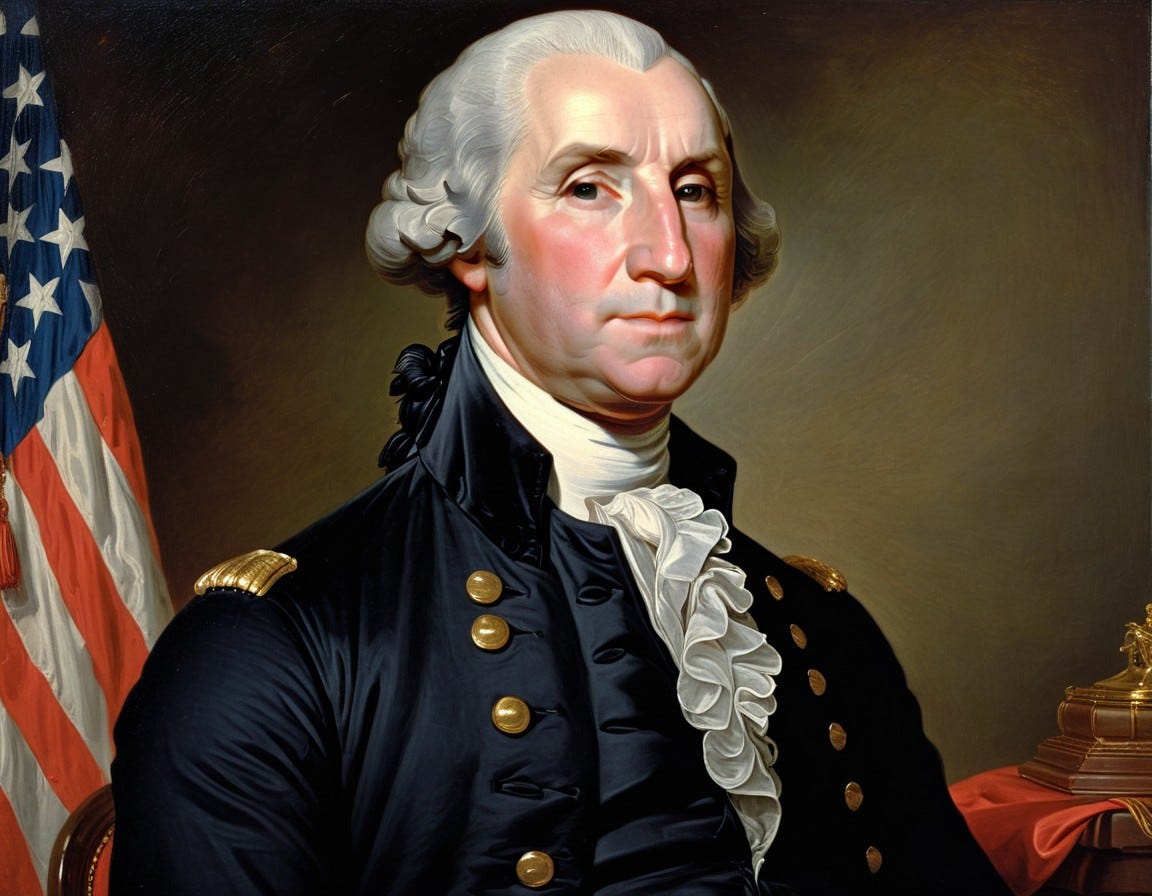
No man, who has ever deeply read the human history, and especially the history of republics, but has been struck with the consciousness, how little has been hitherto done to establish a safe depositary of power in any hands, and how often, in the hands of one, or a few, or many,—of an hereditary monarch, or an elective chief, or a national council, the executive power has brought ruin upon the state, or sunk under the oppressive burden of its own imbecility. Perhaps our own history has not, as yet, established that we shall wholly escape all the dangers; and that here will not be found, as has been the case in other nations, the vulnerable part of the republic.
Joseph Story, Familiar Exposition of the Constitution §252, circa 1840
I’ve noticed the term “Commander-in-Chief” being bandied about quite a bit lately. From CNN asking Harris if she is prepared to be Commander-in-Chief, to Kamala emphatically talking about the President being Commander-in-Chief during her first presidential debate, to people pondering whether Democrat voters are trying to elect a competent Commander-in-Chief, it seems this phrase has gained popularity and is being used almost as though to denote dictatorial directorship over the country.
The President is often called the “leader of the Country” or the “leader of the free world”, which goes hand-in-hand with this sudden spotlight on the term “Commander in Chief.” What is the President’s role as “Commander in Chief”? What does that phrase mean in its correct constitutional context? What is the President’s responsibility, if any, beyond that role? Let’s take a look:
The President shall be Commander in Chief of the Army and Navy of the United States, and of the Militia of the several States, when called into the actual Service of the United States; he may require the Opinion, in writing, of the principal Officer in each of the executive Departments, upon any Subject relating to the Duties of their respective Offices, and he shall have Power to grant Reprieves and Pardons for Offences against the United States, except in Cases of Impeachment.
He shall have Power, by and with the Advice and Consent of the Senate, to make Treaties, provided two thirds of the Senators present concur; and he shall nominate, and by and with the Advice and Consent of the Senate, shall appoint Ambassadors, other public Ministers and Consuls, Judges of the supreme Court, and all other Officers of the United States, whose Appointments are not herein otherwise provided for, and which shall be established by Law: but the Congress may by Law vest the Appointment of such inferior Officers, as they think proper, in the President alone, in the Courts of Law, or in the Heads of Departments.
The President shall have Power to fill up all Vacancies that may happen during the Recess of the Senate, by granting Commissions which shall expire at the End of their next Session.
This section outlines most of the President’s constitutional responsibilities. First, let’s address “Commander in Chief.”
Notice, the President is “Commander in Chief of the Army and Navy…and of the Militia.” That’s the extent of “Commander in Chief.” The President is the highest ranking officer in the military to whom all other officers report, and who may require of those officers opinions on the duties respective to their offices. As well, the President can grant reprieves and pardons for crimes committed against the union (as a country, the United States is a union - more on that coming soon).
The President can make treaties with other countries, provided he has approval from two-thirds of the Senate. He nominates ambassadors, ministers, consuls, and Supreme Court Justices, again requiring approval from the Senate. As well, while the Senate is in recess, the President may fill other government vacancies, but such appointments expire when the Senate next convenes.
In two short paragraphs, we have now covered almost the entirety of the President’s role in the United States. The President is not responsible for the economy (unless he has complete authority over all things economic, he could not control it even if he wanted to). The President is not responsible for infrastructure - this is something the founders said belong to the States (see the Federalist No. 45).
He’s not responsible for investing in healthcare, childcare, science, research, energy, business, manufacturing, other countries, nor pretty much anything else. He does, however, have a few other responsibilities:
He shall from time to time give to the Congress Information of the State of the Union, and recommend to their Consideration such Measures as he shall judge necessary and expedient; he may, on extraordinary Occasions, convene both Houses, or either of them, and in Case of Disagreement between them, with Respect to the Time of Adjournment, he may adjourn them to such Time as he shall think proper; he shall receive Ambassadors and other public Ministers; he shall take Care that the Laws be faithfully executed, and shall Commission all the Officers of the United States.
The President is required occasionally to provide Congress with a report on the state of the Union. That said, there is no requirement for this to be an oral report; as a matter of fact, early on, it was not uncommon for the report to be written, unlike the pep rallies that they have become today. He is to recommend “measures” he believes are “necessary and expedient,” though only measures that would fall within Congress’ constitutional authority and responsibilities (which may be explored in yet another post). He is to receive foreign dignitaries. He is also the Chief Law Enforcement Officer for the United States - in other words, the President is responsible for ensuring the laws of the United States (laws passed by Congress) are enforced (a responsibility we’ve seen neglected on many counts by many executives).
Finally, though this is common knowledge and appears earlier in the Constitution (Article I, Section 7), the President is responsible for approving (or vetoing) bills authored by Congress.
Why then are moderators in debates asking what a candidate’s plans are for the economy? Why do they speak of him being the country’s “leader”? Why do we hear in the news about “job creation” and employment numbers, as if this is tied directly to the President’s office? Why are issues like healthcare and infrastructure mainstays of journalism and press conferences, when none of these have anything to do with anything within the President’s authority?
Because people don’t know or understand the Constitution. Because these issues play on the people’s emotions and will sway them in elections. It is critical to the survival of this country that people become familiar with the Constitution, the responsibilities of the federal government, and those powers which are left to the states. If we continue on our current trajectory, we will not “wholly escape all the dangers” of which Joseph Story spoke, and may very well be “sunk under the oppressive burden of [the executive’s] own imbecility.”
Note: The federal government itself doesn't exist to "run America" or "run the country.” As stated above, I have a piece in the works that will discuss this further. Watch for a coming article titled, “In order to form a more perfect Union...”
"Presidents cannot really, and should not really control the country. Under the real U.S. Constitution, the president has a certain, limited job to do, and controlling the country isn't it.
"So, when it comes to domestic policy and the country, the less the president does the better. He should not try to intervene in everything. He should stay out of almost everything domestic."
Why Joe Biden Can Still Hurt America. Bad. Who is really running the country?
https://open.substack.com/pub/michael796/p/why-joe-biden-can-still-hurt-america
Our elected REPRESENTATIVES have taken it upon themselves to assume more power and authority than they were EVER intended to have. There have been some President's, and others, who think themselves some sort of KING of our country, which is NOTHING like what our government is set up to be.
There is a large portion of We the People who have either paid no attention to what is going on because they have no knowledge of how the system is constructed OR they just don't care. This kind of mentality is detrimental to maintaining our Republic. A huge part of the problem is the fact that our illustrious "leaders" decided to get involved in the education of our youth. Then they replaced courses like CIVICS and US HISTORY (REAL history, not the woke version of things), with "social studies." The process of dumbing down the public started many years ago. Those who THINK they have power always want MORE. And they will manipulate things any way possible to gain more control than ANYONE should ever have.